Bible. King James (1912)
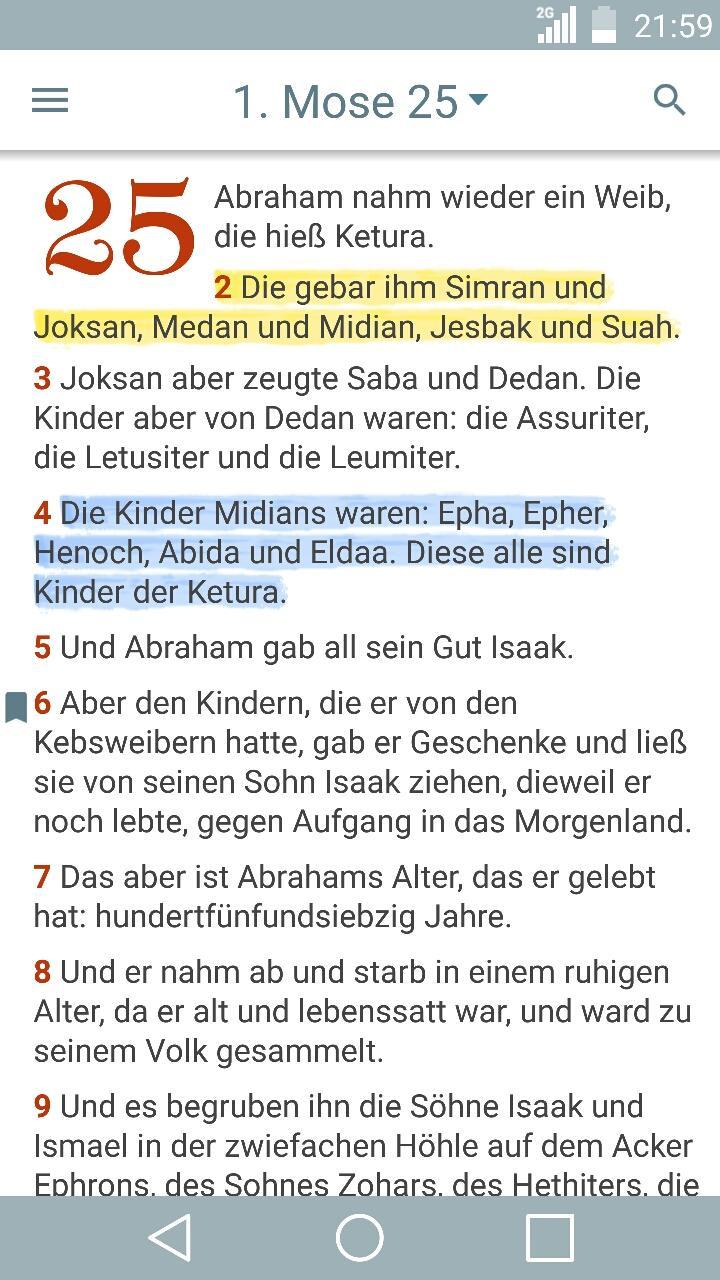
Bibel. Lutherbibel (1912)
The Luther Bible (abbr. LB) is a translation of the Old and New Testaments of the Bible from the ancient Hebrew, the Aramaic and the ancient Greek languages into the German language (Early New High German). The translation was made by Martin Luther with the collaboration of other theologians (particularly Philipp Melanchthon). In September 1522 a first edition of the New Testament was finished (hence the name September Testament), and in 1534 a complete Bible.
Translation of the New Testament
The Protestant tradition makes it very clear that in these weeks Luther radically turned away from the traditional Latin Vulgate and towards the original Greek text. Nevertheless, the influence of the Vulgate is strongly felt in Luther's New Testament. The Luther Bible thus represents the legacy of the medieval Latin tradition in the German-speaking area to this day.
So it says in Philippians 4:7: "And the peace of God, which is higher than all that understand, shall guard your hearts and your minds in Christ Jesus." This so-called pulpit blessing is particularly important for the Protestant liturgy. Even the current revision of the Luther Bible from 1984 preserves the text form of the old Vulgate “Et pax Dei… custodiat corda vestra” (guard your hearts), while the Nova Vulgata corrects according to the original Greek text: “… custodiet corda vestra” (will guard your hearts).
Translation of the Old Testament
The “September Testament,” translated by Luther in a short time and in a personally highly stressful situation, is the reformer’s own achievement. However, if you look at the Old Testament that was then tackled in Wittenberg, the Luther Bible also presents itself as a collaborative work; Luther's language skills were higher in Greek than in Hebrew.
Read more